 |
| Fragile as the World (Rita Azevedo Gomes, 2002) |
Tuesday, August 30, 2016
Rita Azevedo Gomes' Amorous Atmosphere

Monday, August 22, 2016
Dark in the White Light (Vimukthi Jayasundara, 2015)
 |
| Dark in the White Light |
Dark in the White
Light has something to do with death. Three men—a surgeon, an organ dealer,
and a student—suffer and wander in the jungles of Sri Lanka. They are stark
characters—mere figures in fact—in this contemplative and horrifying meditation
on life, death, and the state between the two.
Dark in the White
Light competed in the main slate at the 2015 Locarno Film Festival.
Jayasundara rose to prominence when he won the Camera d’Or at Cannes for his
first feature, The Forsaken Land (2005).
Ever since then, he has been a staple of the festival circuit. Judging from Dark in the White Light, I can see why.
The film uses long shot, long takes, the stock-in-trade of art house cinema. Jayasundara
stands out by enlivening this default aesthetic. In bold shots, Jayasundara
shows his knowledge of space and spatial relations, often staging action in the
background. These shots draw attention to bodies that are raped, stabbed,
hanged, burned, and beaten. By focusing on body trauma, Dark in the White Light threatens to become an art house
miserablist film. It says little about violence, but shows a lot of it. A young
Buddhist monk learns of an ever-present “Lord of Death.” It’s in the air. From
scene to scene, you wait for death and his brother, violence, to make their inevitable
appearances. Death and violence are as concrete and abstract as the film’s
poetic title.
Tuesday, August 16, 2016
Autohead (Rohit Mittal, 2016)
 |
| Autohead (Rohit Mittal, 2016) |
A micro-budget docu-fiction with a
stress on the fiction, Autohead is
Rohit Mittal’s first feature. A three-man film crew follows the daily life of
Narayan (Deepat Sampat), an auto rickshaw driver in the slums of Mumbai. The
crew documents a thirty-year-old man racked with sexual frustration, growing
paranoia, and seething anger. And things only get worse from there.
Mittal shows
promise with his first film. Autohead
appropriates clichéd documentary grammar (handheld shots, direct addresses,
editing in the middle of scenes, moments in which Narayan tells the crew to
stop recording, etc.) to draw attention to cinema’s role with poverty and class
conflict in India. In this way, and as inevitably mentioned
by critics,
Autohead is a blend of Man Bites Dog (1992) and Taxi Driver (1976). But Mittal’s film
doesn’t have the former’s comic exaggeration nor the latter’s full-fledged
urban expressionism. Nor should Autohead
mirror these qualities exactly. It is its own film after all.
Autohead poses blunt social issues; it
gushes forth from the dialogue. But what lingers in the mind after a few days
away from the film is Sampat’s performance. A portrait is as good as its
subject, and this is the case with Autohead.
Captured in long takes, Sampat imbues Narayan as an enigmatic and protean
figure. His behavior erratic, he changes from one scene to the next. He
swaggers like a puffed up peacock, delighted by the attention he gets from the
camera’s eye. He explodes when talking with customers or his mother. Narayan is
an enigma who reveals his riddle by film’s end.
We interrupt this broadcast...
 |
A new era dawns on Mongrel Muse. Along with the usual
posts, each week you’ll find fresh content published here. These will be curt, yet casual dispatches on new and new-ish indie
and micro-budget films. They'll also focus on films traveling the festival
circuit that haven’t gotten enough attention. I want to shine a light on movies
that you should keep on your radar and seek out. The first entry is on Rohit
Mittal’s debut feature, Autohead (2016), which got some buzz at
last year's Film Bazaar.
Water Works: A Day in the Country
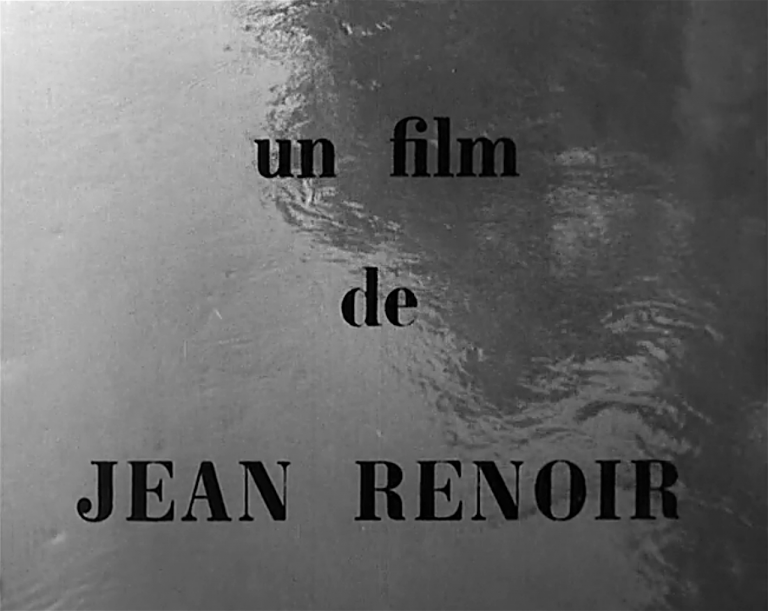 |
| A Day in the Country (Jean Renoir, 1936) |
Sunday, August 14, 2016
Chung Mong-hong: The Antics of a Graphic Sensibility
 |
| Soul (Chung Mong-hong, 2013) |
Show & Tell: John Wiese
 |
| John Wiese |
The works featured in the program include:
- Sissy Spacek (2011)
- The Tenses with John Wiese (2014)
- Untitled (2014)
- Leather Bath (2013)
- Sissy Spacek—Matta Gallery (2014)
- I Bet You Can't Finish That Glass of Water (2014)
- Three Glass Bottles (2014)
- A Specific Point in a Continuous Whole (2014)
Subscribe to:
Posts (Atom)